

The constant and uninterrupted presence of the Monastery in the life of Crete for eight centuries is an integral part of the island’s history.
The multi-faceted work of the Monastery unfolds through time. Historical sources have shown that the Monastery has been a center of education and manuscript copy. In addition, the gold embroidery workshops dazzled the world in the 17th and 18th century.
The struggles of the Monastery against the conquerors have been an inspiration. The sacrifice of the people who lived and died there has generated strong emotional impact and has become an example.
The Turks occupied Crete at a time of bloom for the Arkadi Monastery.
The monks participated in the Revolution of 1821 and took leading part in major events. The first disaster is a fact: the monastery is looted and the monks have no choice but to abandon it for a small period. They return soon after.
The ultimate contribution of the Monastery is its action of self-sacrifice, heroism and God-pleasant altruism: the Holocaust of November 8th 1866. This way the Monastery manifested its active presence in the fight against enslavement. It managed to throw off the yoke of slavery that the enemies raged to impose and succeeded in changing the course of Crete’s history.
Ever since, the Monastery has been carrying the weight of its history and taking part in the struggles that followed, in all aspects of life, on our long-suffering island in an effort to live up to its glorious past in any possible way.
Foundation
It is not quite clear exactly when the monastery was founded.
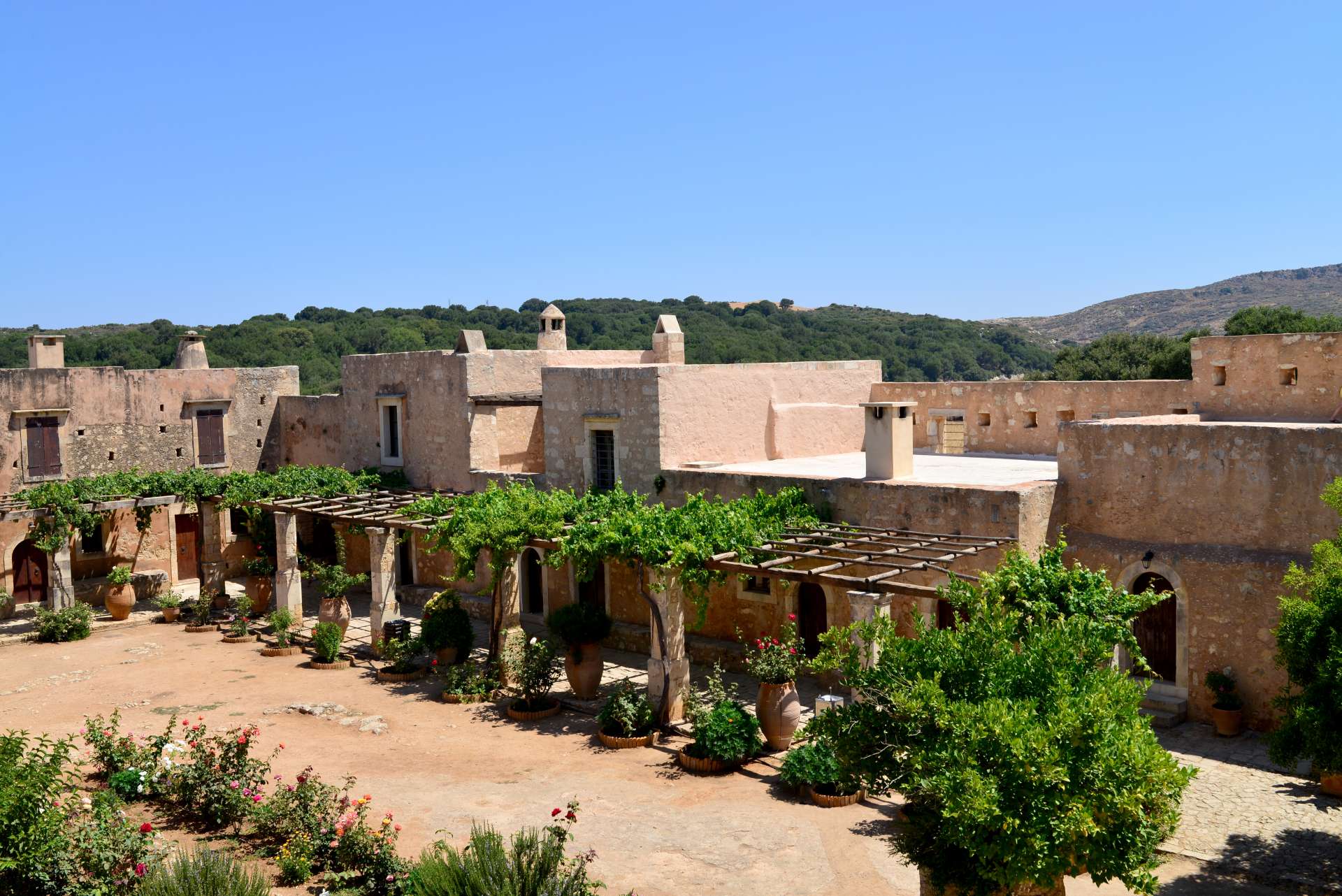
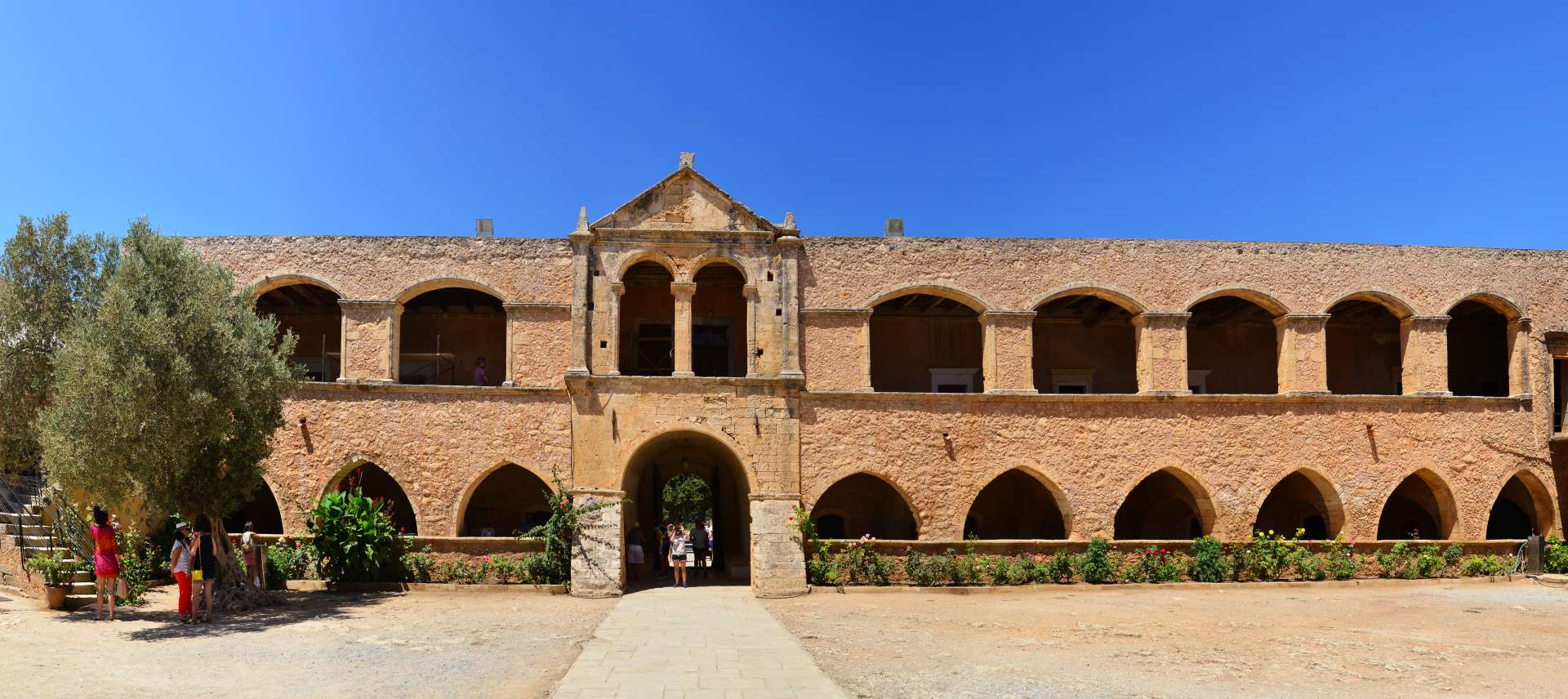
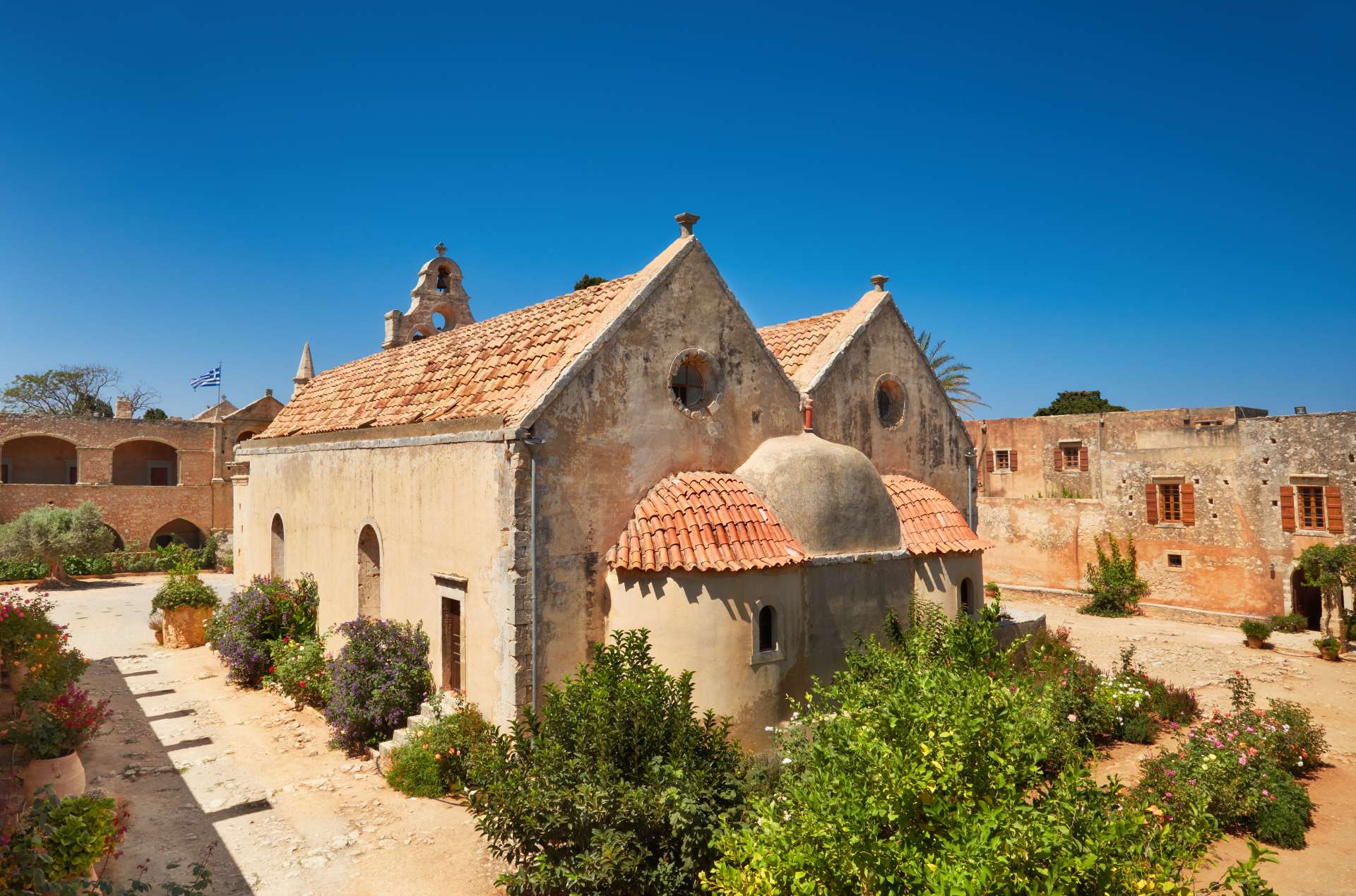
According to history, the Arkadi Monastery was founded around the 11th century AD, by a monk named Arkadios. It was initially dedicated to St. Constantine and St. Helen. The smaller church in the middle of the plateau that was initially built with few cells around was replaced by a majestic double-aisle church in 1587 as evidenced by the inscription at the base of the bell-tower. By 1600 AD, the building was completed for the whole castle-monastery in its current form, with very few changes being made with the years.
In each of its various periods of life, the Arkadi Monastery became known for different reasons. In the 17th century, it was a very famous manuscript copy center, manuscript-copying being a very profitable activity for the monks of the Monastery. Many of such manuscripts are preserved to this day and some are also exhibited in the actual Museum of the Monastery.
While in the 17th century it operated as described above, in the 18th century it became a goldwork embroidery workshop, where the monks embroidered ecclesiastic and hieratic fabrics and vestments with stiches of technical difficulty and rigid gold and silver thread and sold them to churches and monasteries around the world to ensure income. Many of such pieces are exhibited in the actual Museum of the Monastery.
Yet, the most glorious event that elevated the fame of the historic Monastery is its resistance to the Ottoman conquerors. In 1866, at the start of the Cretan Revolution against the Ottoman imperialism, 964 fighters and people from the nearby villages found themselves enclosed inside the Monastery, in an effort to save themselves and fight against the tyranny they had suffered during the Ottoman occupation.
In the two-day siege, the Cretans rightly fought against the Ottomans, and despite their sacrifice in the monastic cells, the yard or even the powder keg that ended their life, that siege has been a loud awakening for the peoples of Europe regarding the trials that the conquerors subjected the Cretans to. It defined and determined the spirit and courage of the Greeks against injustice and forcible occupation of their land.
An artistic depiction installed in the powder keg (copy of a painting by Vryzakis, exhibited in the National Gallery) fully attributes the meaning and the ideals the captivated Cretans fought for in the Monastery of Arkadi. As Hegumen Gabriel gives his blessing for the start of the fight for their belief and their ideals, the besieged people around him are in agony, they suffer, they hope, they struggle, they sacrifice themselves and anticipate, after their sacrifice, their own Resurrection in eternity, laurel-crowned, brought by angels from the sky.
News
Read about the latest news of the Sacred Monastery of Arkadi.
Cretan Shot – Special Event
The Organizing Committee of School Sports Activities of Rethymno, in cooperation with the Sports Club OKA Preveli and the “Cretan Breeched Dancers Club” presented the traditional game “Cretan Shot”.
Learning history … through play: on-line treasure hunt on Arkadi
The third On-Line Treasure Hunt for Junior and Senior High School students of our region is organized by the Secondary Education Administration of Rethymno in cooperation with the Association of Classical Greek Teachers of Rethymno, under the auspices of the Metropolis of Rethymno and Avlopotamos, the Sub-region of Rethymno and the Municipality of Rethymno, in the framework of the celebrations of the Regional Entity of Rethymno for the Arkadic Self-Sacrifice.
Depiction of the Holocaust at the Powder Keg of the Arkadi Monastery
With the support of His Eminence the Metropolitan of Rethymno and Avlopotamos Mr. Evgenios, a new piece of artwork has been produced in memory of the heroic self-sacrifice of the defenders of the Sacred Patriarchal and Stauropegic Monastery of Arkadi, on the night of November 8th 1866.